
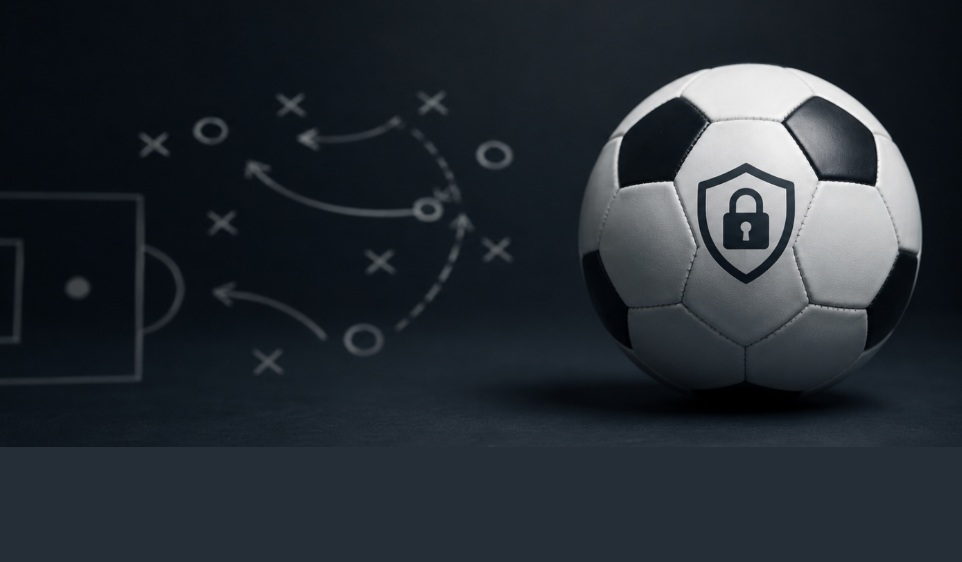
The World Cup season may have come to an end, but it is worth looking at things through the lens of the… “beautiful game” of Cybersecurity. After all, both football and information security require strategy, discipline, teamwork, and continuous adaptation against an opponent who is always looking for ways to win the match.
In the world of cybersecurity, there are organizations that take a defensive approach, settling for compliance with basic requirements and simply trying to avoid a heavy defeat. On the other hand, cyber champions systematically invest in people, processes, and technologies, aiming not only to defend effectively but also to anticipate their opponents’ next moves. In the final phase of the security “championship,” there is no room for complacency.
Designing a defensive strategy is reminiscent of a national team’s preparation before a major tournament. The asset inventory serves as the team roster: systems, applications, data, and infrastructure that need protection. Security policies define the rules of the game, while Risk Management identifies the most dangerous opponents and the team’s weak spots. Vendor management ensures that partners and third-party providers do not become the “weak link” that leads to an easy goal for attackers.
During the preparation and defense-strengthening stage, vulnerability management acts like a national team’s medical staff, identifying injuries and weaknesses before they develop into serious problems. Change management ensures that every new technology, application, or software update enters the environment in a controlled and secure manner. Configuration management helps us know at any moment which “players” are on the pitch and what positions they occupy, while patch management ensures that players are always in peak match condition.
During the match, the Security Operations Center (SOC) takes on the role of the coach, watching every move on the pitch. Security incident management detects and tackles suspicious activities before they turn into successful attacks. Security alerts are like a referee’s warnings for dangerous play. A single incident might just be a bad play, but continuous indicators of malicious activity signal an organized offensive push that requires an immediate response (a yellow and/or red card).
Identity & Access Management (IAM) ensures that only authorized “players” enter the field of play. Multi-Factor Authentication (MFA) functions as a second security check at the stadium entrance, significantly reducing the chances of unauthorized access. Those who attempt to enter without the necessary credentials are treated like fans without a ticket: they stay outside the match.
At the same time, user awareness and training serve as the team’s fitness conditioning program. No matter how advanced the defensive technologies are, a careless user can clear the path for phishing attacks, malicious attachments, or social engineering. The best technology is not enough when players fail to follow the game plan.
Finally, the continuous improvement of cybersecurity resembles a national team’s ongoing effort to climb the world rankings. Every incident, every simulation exercise, and every security audit provides valuable lessons. Organizations that analyze their mistakes, adapt their tactics, and invest in their resilience are the ones most likely to lift the cyber-resilience trophy in an increasingly demanding digital championship.
Dr. Krikor Maroukian

itSMF Hellas International Representative.
Source: www.itsecuritypro.gr